
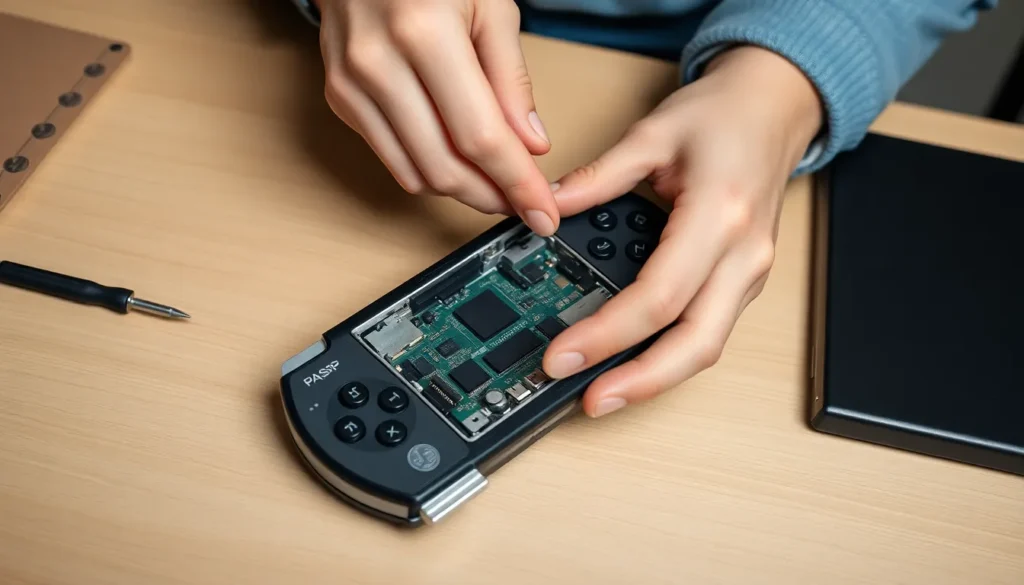

When your PSP starts acting like a moody teenager, it might be time for a motherboard swap. Imagine your trusty handheld gaming console suddenly deciding it prefers staring at the wall instead of playing your favorite titles. Fear not! Swapping out that stubborn motherboard can breathe new life into your gaming experience.
Overview of PSP Motherboard Swap
A PSP motherboard swap addresses performance issues like freezing or screen glitches. Gamers often encounter these problems after prolonged use, indicating potential hardware failure. Replacing the motherboard rejuvenates the device and restores functionality, enhancing the gaming experience.
Various issues lead to motherboard swaps. Common signs include unexpected shutdowns, failure to boot, or distorted audio. Diagnosing these symptoms accurately is crucial for determining whether a swap is necessary.
Consider the repair process carefully. It involves disassembling the console, which requires specific tools and techniques. Enthusiasts typically use a small Phillips screwdriver and a plastic prying tool for this job. A clean workspace is essential to avoid losing screws or other small components.
Selecting a replacement motherboard involves several factors. Ensuring compatibility with the PSP model is vital, as different versions may require specific parts. Researching reputable suppliers helps secure quality components, impacting both performance and longevity.
After acquiring a new motherboard, installation follows. This step involves removing the old motherboard and carefully positioning the replacement. Properly connecting all cables and securing components prevents future issues. Testing the device upon reassembly ensures the swap was successful and functionality is restored.
This process may seem daunting, but proper guidance simplifies each step. Detailed tutorials and instructional videos provide valuable assistance. With patience and attention to detail, a successful motherboard swap significantly extends the life of the PSP.
Benefits of Replacing the PSP Motherboard
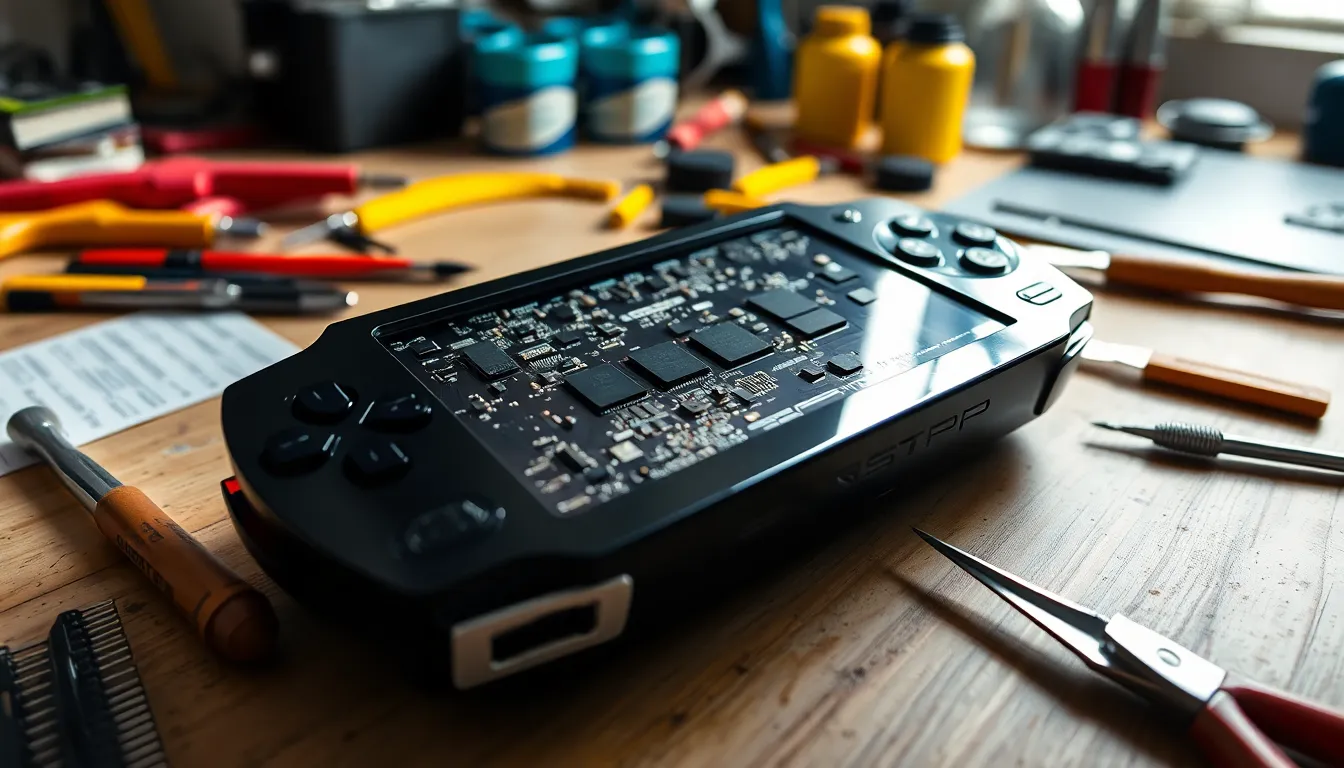
Replacing the PSP motherboard significantly enhances gaming experience by addressing underlying issues. Improved functionality can bring back smooth gameplay and reduce lag.
Improved Performance
Gameplay becomes noticeably smoother after a motherboard swap. The replacement addresses issues like freezing and unexpected shutdowns. Improved responsiveness occurs due to upgraded components working together efficiently. Gamers often notice enhancements in loading times, allowing more enjoyable gaming sessions. Stability increases as well, reflecting in fewer crashes while playing your favorite titles.
Enhanced Features
Swapping the motherboard can also unlock additional features. Newer motherboard models might support expanded storage options or improved connectivity. Enhanced audio quality may emerge, enriching the overall gaming experience. Access to updated firmware becomes possible, offering better software compatibility. Gamers benefit from features that even the original hardware couldn’t support, enhancing the long-term usability of the console.
How to Identify Motherboard Issues
Identifying motherboard issues in a PSP is crucial for timely interventions. Understanding the symptoms and using appropriate diagnostic tools can streamline the troubleshooting process.
Common Symptoms
Unexpected shutdowns often signal a motherboard problem. Failure to boot can also indicate hardware malfunction. Screen glitches, like distortion or flickering, frequently arise during use, suggesting potential issues. Users may notice decreased audio quality, which can stem from motherboard failures. Frequent freezes during gameplay further highlight the need for investigation. These signs together suggest a necessary motherboard swap to restore functionality.
Diagnostic Tools
Using the right diagnostic tools simplifies the identification process. A multimeter helps measure voltage and check for short circuits. Software tools like homebrew applications allow for testing system performance and stability. Screwdrivers facilitate easy disassembly, enabling visual inspections of the motherboard. Additional tools, such as thermal cameras, can detect overheating components. Opting for these tools enhances the diagnostic accuracy, guiding users in making informed decisions about repairs.
Step-by-Step Guide to PSP Motherboard Swap
Performing a motherboard swap on a PSP requires careful preparation and attention to detail. Each step contributes to the successful revitalization of the device.
Tools and Materials Needed
Gather essential tools and materials before starting the swap. A small Phillips screwdriver simplifies disassembly. A plastic prying tool creates necessary openings without causing damage. Ensure you have a replacement motherboard designed for your specific PSP model. A clean workspace, free from distractions, prevents losing small screws and components. Additionally, having tweezers helps in handling tiny parts, while a multimeter assists in testing connections later.
Disassembly Process
Begin by powering off the PSP to avoid accidents. Remove the battery and any memory cards present. Unscrew the outer casing using the Phillips screwdriver and gently pry it open with a plastic tool. Take care not to bend any clips. Next, disconnect the various ribbon cables attaching the motherboard to other components. Document the cable placements or take photos, as this aids in reassembly. Finally, remove the screws securing the motherboard and lift it out carefully.
Installing the New Motherboard
Position the new motherboard in the PSP casing. Ensure all connectors align properly before securing it with screws. Reconnect the ribbon cables exactly as documented during disassembly. Each cable plays a vital role in device functionality. After ensuring all connections are firm, double-check the screws to avoid loose fittings. Properly installed components enhance performance and reduce future issues.
Reassembly Tips
Carefully place the outer casing back onto the PSP. Align it securely to avoid damage during reassembly. Use the Phillips screwdriver to fasten screws gently, avoiding over-tightening, which can cause stress on the casing. Reinsert the battery and memory cards. Power up the console to test its functionality. Confirm all features, such as audio and video output, work smoothly. Minor adjustments may be necessary, but patience ensures a successful swap.
Potential Risks and Considerations
Risks associated with a PSP motherboard swap include damaging internal components during disassembly. Users may break fragile parts if they handle tools carelessly. Researching the specific model helps avoid compatibility issues with replacement motherboards. Selecting the wrong motherboard can lead to further malfunctions or render the console unusable.
Discharging static electricity before touching internal components is crucial. Static can damage sensitive electronic parts, so using an anti-static wrist strap or grounding oneself helps minimize risk. Errors during reassembly can also result in hardware problems. Ensuring that all cables connect correctly and securing screws properly is essential to maintain functionality.
While looking for replacement motherboards, consider the credibility of suppliers. Purchasing from reputable sources reduces the likelihood of obtaining defective components. Detailed reviews and recommendations can guide users in making informed choices. Following installation tutorials step-by-step is advisable as missing key actions could affect performance.
Testing the functionality after reassembly is vital. Some issues might not be apparent until after reinstallation, so running diagnostics can uncover hidden problems. Understanding warranty implications is also important. Opening the PSP may void any remaining manufacturer warranty, leading to potential loss of support.
Monitoring system behavior post-swap is necessary. Players should observe for signs like unusual noises, unexpected shutdowns, or failure to boot. These indicators might signal further issues that could require additional repairs or adjustments. Remaining cautious throughout the process helps ensure the gaming experience improves rather than deteriorates.
A motherboard swap can breathe new life into a PSP that’s struggling with performance issues. By addressing symptoms like unexpected shutdowns and screen glitches, users can restore their gaming experience to its former glory. With the right tools and guidance, the process becomes manageable, allowing for a successful installation of a compatible replacement.
The benefits are substantial, offering smoother gameplay and enhanced features that improve overall usability. As users monitor their device post-swap, they’ll likely find renewed joy in their gaming sessions. Investing time in this repair not only extends the life of the PSP but also enhances the enjoyment of gaming for years to come.


